

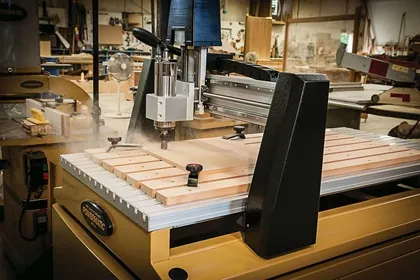
Woodworking has long been celebrated as a craft that marries skill and creativity. In recent times, the introduction of Computer Numerical Control (CNC) machines has revolutionized the landscape, offering unprecedented precision, efficiency, and creative possibilities. In this exploration, we delve into the world of woodworking with CNC machines, examining the impact on craftsmanship, design capabilities, and the overall woodworking experience.
The CNC Advantage in Woodworking
Traditional woodworking often involved manual processes, where skilled artisans meticulously shaped and crafted wood by hand. While this approach has its charm, CNC machines have introduced a new era by automating and enhancing various woodworking tasks. They operate based on digital designs and precise computer-controlled movements, allowing for intricacy and accuracy that can be challenging to achieve manually.
Precision and Accuracy
One of the defining features of CNC woodworking is the unparalleled precision and accuracy it brings to the craft. Whether it’s intricate carvings, precise cuts, or complex joinery, they execute tasks with microscopic precision. This level of accuracy not only enhances the overall quality of projects but also opens doors to intricate designs that would be exceptionally challenging to achieve by hand.
Versatility in Woodworking Design
Woodworkers are no longer limited by the constraints of traditional tools when it comes to design complexity. CNC machines allow for the creation of intricate patterns, 3D carvings, and detailed engravings that push the boundaries of what’s possible in woodworking. The versatility of CNC design capabilities empowers woodworkers to explore a wide range of styles, from classic and ornate to modern and abstract.
Efficiency and Time Savings
Time is a precious commodity, and these machines excel in optimizing woodworking processes. Tasks that might take hours or even days manually can be completed swiftly and efficiently with CNC technology. This efficiency not only accelerates project timelines but also allows woodworkers to take on more complex and challenging endeavors.
Repeatability and Consistency with Woodworking
They excel in reproducing identical pieces with remarkable consistency. Once a design is programmed, the machine can replicate it flawlessly, ensuring that each piece in a batch is virtually indistinguishable from the next. This repeatability is particularly valuable in mass production or when creating sets of furniture or components that require uniformity.
Complex Joinery Made Simple
Joinery, a cornerstone of woodworking, becomes an art form with CNC machines. Traditional joints like dovetails, mortise and tenon, and finger joints are executed with precision and speed. Complex interlocking designs that were once reserved for skilled artisans are now achievable with CNC technology, expanding the possibilities for innovative woodworking.
Intricate Carvings and 3D Woodworking
These machines shine when it comes to creating intricate carvings and 3D woodworking projects. From detailed reliefs to sculptural elements, the ability to translate digital designs into tangible, three-dimensional woodwork is a game-changer. This capability has found applications in crafting decorative furniture, artistic sculptures, and even intricate architectural elements.
Material Versatility
CNC machines are not limited to traditional materials. While they excel in working with hardwoods, they are equally adept at handling a variety of materials, including softwoods, plywood, MDF (Medium-Density Fiberboard), and even certain metals and plastics. This versatility broadens the scope of applications and encourages experimentation with different materials.
Digital Design Integration Woodworking
CNC woodworking seamlessly integrates with digital design processes. Designers can create detailed models using Computer-Aided Design (CAD) software, and these digital designs are translated into precise physical creations by the CNC machine. This synergy between digital and physical realms streamlines the design workflow, fostering a more dynamic and efficient creative process.
Reduced Material Waste
Precision cutting by one of these machines minimizes material waste, a factor that holds significance both economically and environmentally. Traditional woodworking often involves substantial material losses due to imprecise cuts or adjustments. CNC technology optimizes material usage, contributing to cost-effectiveness and sustainable practices.
Automation and Reduced Labor Intensity
CNC machines significantly reduce the need for extensive manual labor. While skilled operators are essential for programming and overseeing the CNC process, the automation of cutting, carving, and shaping tasks means less physical effort is required. This not only improves workplace efficiency but also addresses challenges related to skilled labor shortages in the woodworking industry.
Customization and Personalization
Despite the precision and automation, CNC woodworking doesn’t sacrifice the element of customization. In fact, it enhances the ability to create custom and personalized designs. Woodworkers can easily modify digital designs to meet specific requirements, whether it’s adapting dimensions, adding personalized engravings, or incorporating unique details for a bespoke touch.
Craftsmanship and the Role of the Woodworker
While CNC technology has introduced automation and efficiency, the role of the skilled woodworker remains pivotal. The craftsman becomes the orchestrator, guiding the CNC machine to execute intricate designs and ensuring that each project meets the highest standards of craftsmanship. The machines become tools in the hands of skilled artisans, amplifying their creative capabilities.
Challenges and Learning Curve
Adopting CNC technology in woodworking comes with a learning curve. Woodworkers need to familiarize themselves with CAD software, CNC programming, and machine operation. However, the investment in learning is often rewarded with enhanced capabilities and the ability to undertake projects that were once considered too intricate or time-consuming.
CNC Woodworking in Art and Industry
CNC woodworking finds applications not only in traditional methods but also in art and industrial sectors. Artists leverage the technology to create intricate sculptures and artistic installations, pushing the boundaries of what can be achieved with wood as a medium. In the industrial realm, they play a crucial role in producing components for furniture, cabinetry, and architectural elements.
A Harmonious Blend of Tradition and Technology
Woodworking with CNC machines represents a harmonious blend of tradition and technology. While CNC technology introduces efficiency, precision, and new design possibilities, it does not overshadow the essence of craftsmanship. Skilled woodworkers continue to infuse their expertise, creativity, and attention to detail into every project, ensuring that each piece carries the mark of artisanal excellence.